How to read a glasses prescription?
Have you ever received a glasses prescription from an eye doctor and looked at those strange abbreviations and numbers in confusion? Those OD, OS, SPH, CYL, and other symbols may seem like a secret code that only opticians can decipher. In reality, reading a glasses prescription is easier than it first appears. A prescription written by an eye doctor contains precise information about your vision, and understanding it gives you a better insight into your eye health.
In this article, we explain in simple terms all the components of a glasses prescription – from the eye designations to understanding prism and pupillary distance. After reading, you’ll be able to read your prescription as confidently as an optician.
The abbreviations used on a glasses prescription mostly come from Latin and have a universal meaning. One of the most important aspects of a prescription is the distance, meaning what distance the glasses are intended for. Distances may be indicated on the prescription as follows:
- Procul – glasses for distance vision
- Prope – near-vision glasses for reading and close work
- Pro media – intermediate-distance glasses (usually for computer work)
OD and OS – What do they mean?
OD and OS indicate the right and left eye, respectively (OD – oculus dexter, OS – oculus sinister). On a prescription, the right eye’s data is always listed first, usually at the top or on the left side.
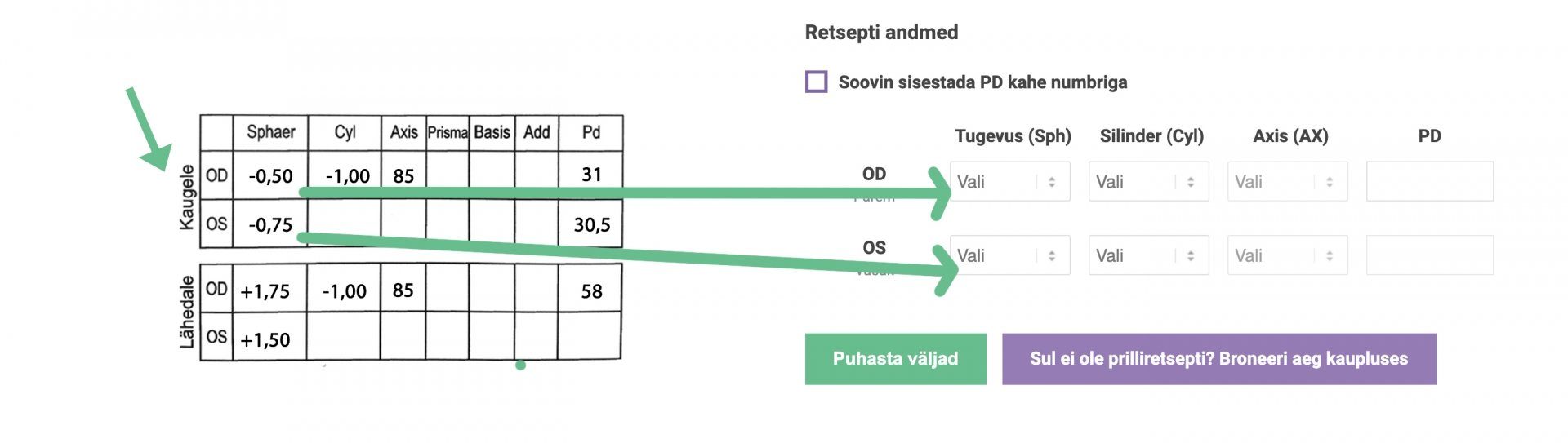
SPH (sphere) shows the lens power in diopters. It is important to pay attention to the + or – sign and ensure the lenses are ordered for the correct distance according to whether you need near or distance glasses.
For distance glasses, the data in the upper section of the prescription is used.
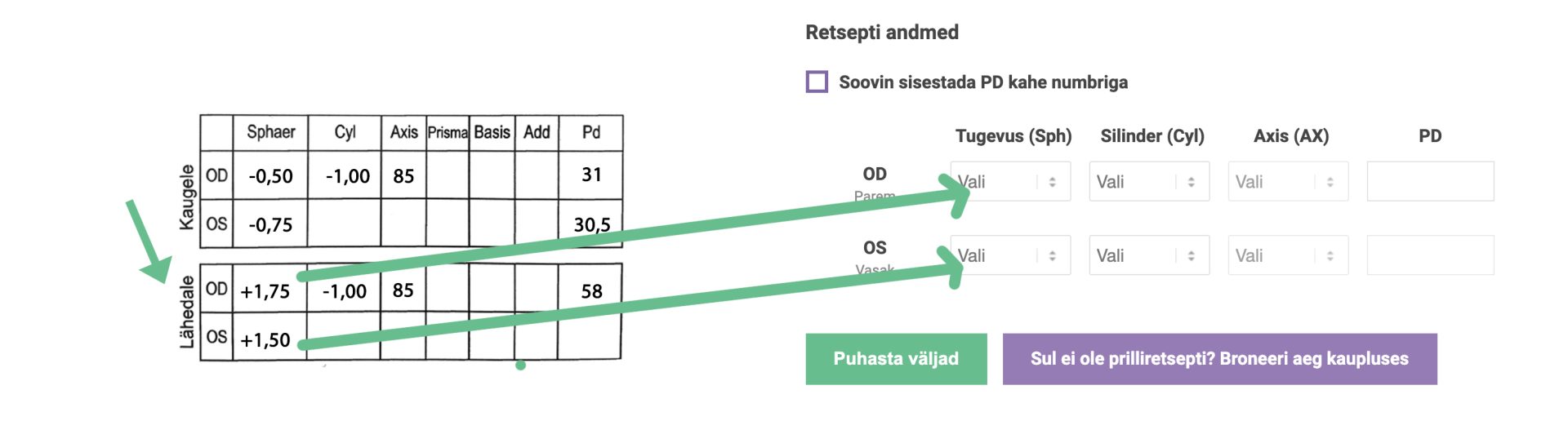
When ordering near-vision glasses, the information in the lower part of the prescription should be used.
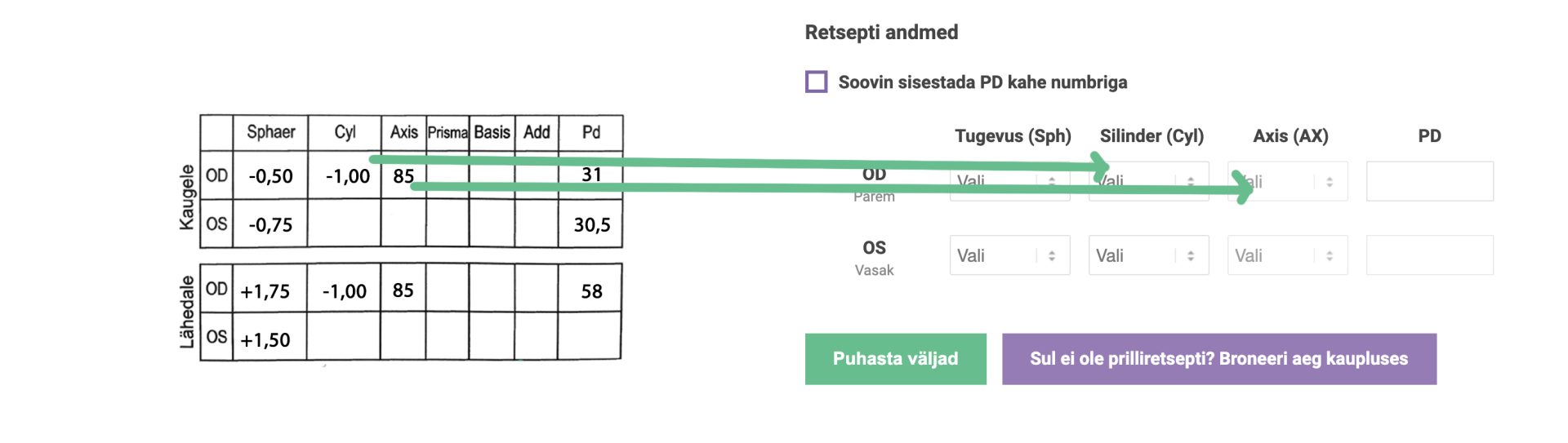
CYL (cylinder) and AX (axis) are necessary to correct astigmatism. Astigmatism usually occurs due to an uneven shape of the cornea or lens, which makes the eye oval-shaped. If the cylinder is not indicated, it means the eye is round and does not require correction.
PD (pupillary distance) indicates the distance between the eyes. It can be listed as a single number (the distance between the pupils) or as two numbers (the distance of each pupil from the bridge of the nose).
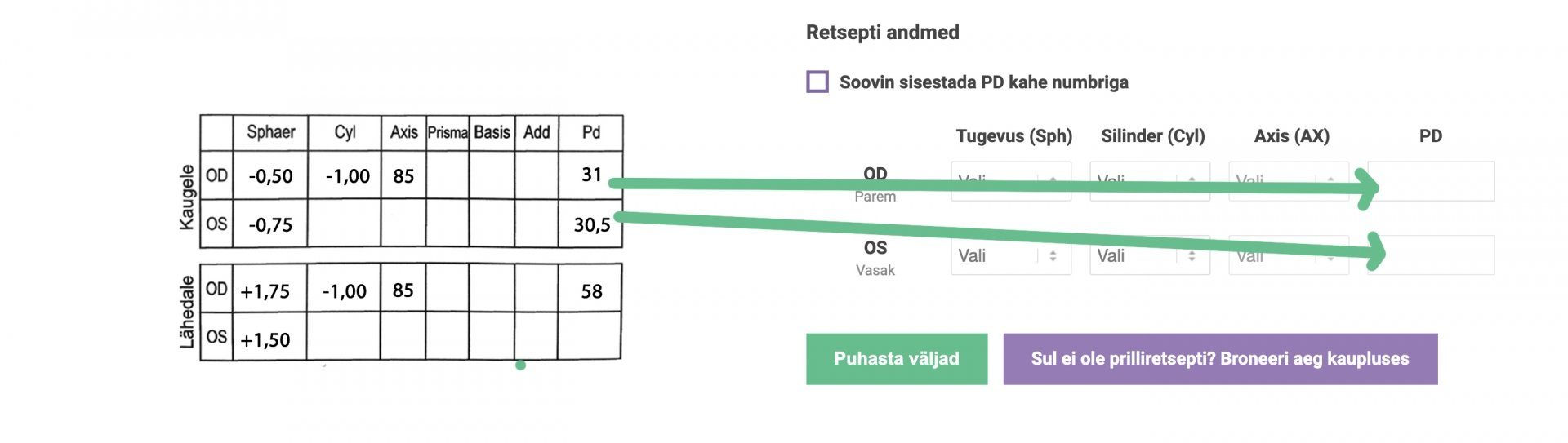
Note! Don’t forget whether you need near or distance glasses, and make sure to choose the correct PD!
If the prescription shows a single PD number, make the corresponding note on the prescription entry form.
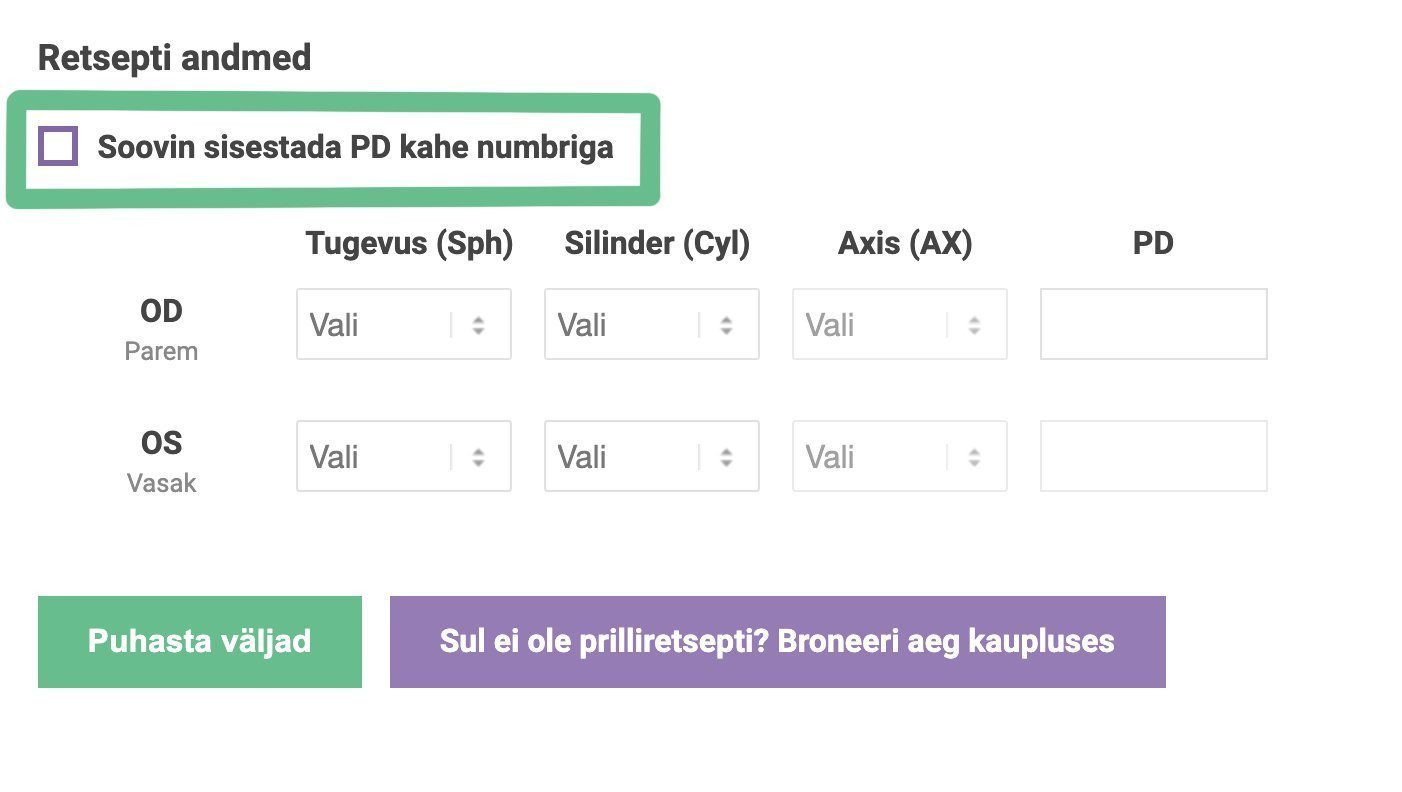
If reading the prescription still seems complicated, take a look at a sample prescription, which is read from top to bottom.
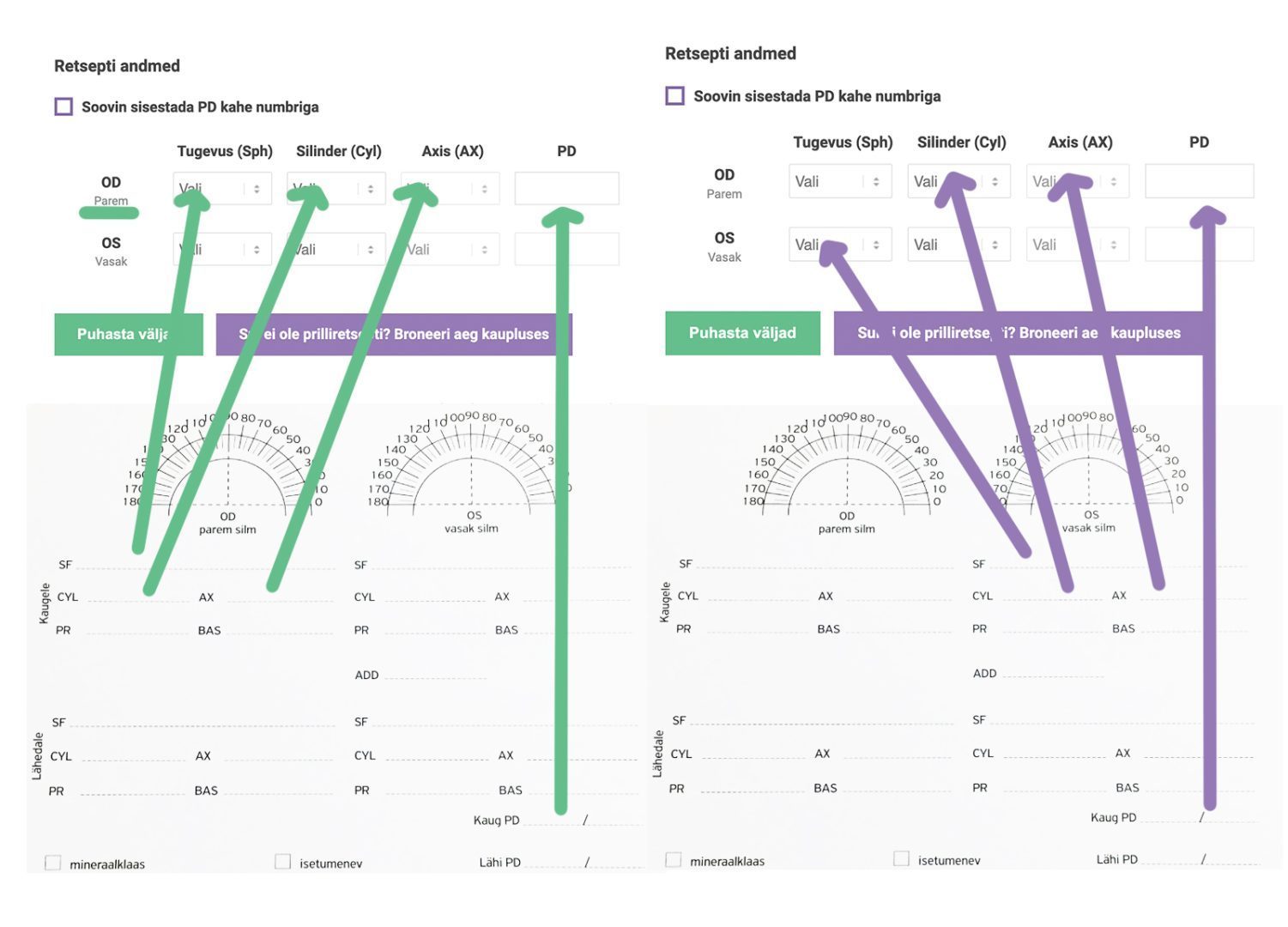
Note! The example shows the prescription strengths for distance glasses. For near-vision glasses, use the prescription data from the “near” section.
Summary
Reading an eyeglass prescription may seem complicated at first, but it is actually a simple skill that helps you monitor your vision and choose glasses with confidence. Abbreviations like OD, OS, SPH, CYL, and PD provide information about the correction you need. Good vision affects all aspects of our daily lives. Therefore, an eyeglass prescription deserves attention and understanding. Monitor your eye health regularly and don’t hesitate to ask questions to your eye doctor or optician.