
What is myopia?
Myopia, or nearsightedness, is a vision disorder where distant objects appear blurry. To achieve a sharp image, light must focus precisely on the macula of the retina. In a healthy eye, light bends so that distant objects are seen clearly without correction. Two main factors affect light refraction in the eye: the eye’s optical system and the axial length of the eye.
There are two main parts of the eye that bend light: the cornea (the transparent front part of the eye) and the lens. In a normal eye, the optical power and length are balanced—light rays converge exactly on the retina, producing a sharp image of distant objects. This is called emmetropia.
In a myopic eye, either the optical system is too strong, or the axial length of the eye is too long. As a result, light rays converge in front of the retina instead of on it. Minus glasses or contact lenses diverge the light so that the focal point moves back onto the retina, improving visual sharpness.
There are several ways to correct vision: glasses, contact lenses, or laser procedures. The choice depends on the condition of the eyes and the person’s preferences.

When does myopia develop?
The eyeball can vary already at birth, although this cannot be noticed externally, since the actual shape of the eyeball is not reflected in the appearance of the eyes and eyelids. A newborn’s eyeball is small, and the eyes are slightly farsighted—usually +2 to +4 diopters. After birth, the natural development of the eyes begins, called emmetropization, during which the eye grows longer and farsightedness decreases.
In a six-year-old child, there should still be slight farsightedness (about +0.5 to +0.75 diopters). This is a good sign, indicating a low likelihood of developing myopia. However, if the visual power is already at zero or there is slight nearsightedness, this may indicate the future development of stronger myopia.
Why does myopia develop?
The development of myopia is a complex process, with genetic factors accounting for only 10–15%. It is a multifactorial problem, meaning there are multiple causes—both hereditary and environmental. Although genes associated with myopia have been identified, their impact is considered smaller compared to environmental factors. Genes mostly determine how sensitive the eyes are to environmental influences that can cause nearsightedness.
Lifestyle plays an important role, especially exposure to sunlight, so a child should spend at least two hours outdoors daily. Regular physical activity and a healthy diet are also important. In today’s digital world, constant near work on computer screens promotes the development of myopia. That is why spending time outdoors, where the eyes can practice focusing on distant objects, is particularly crucial.
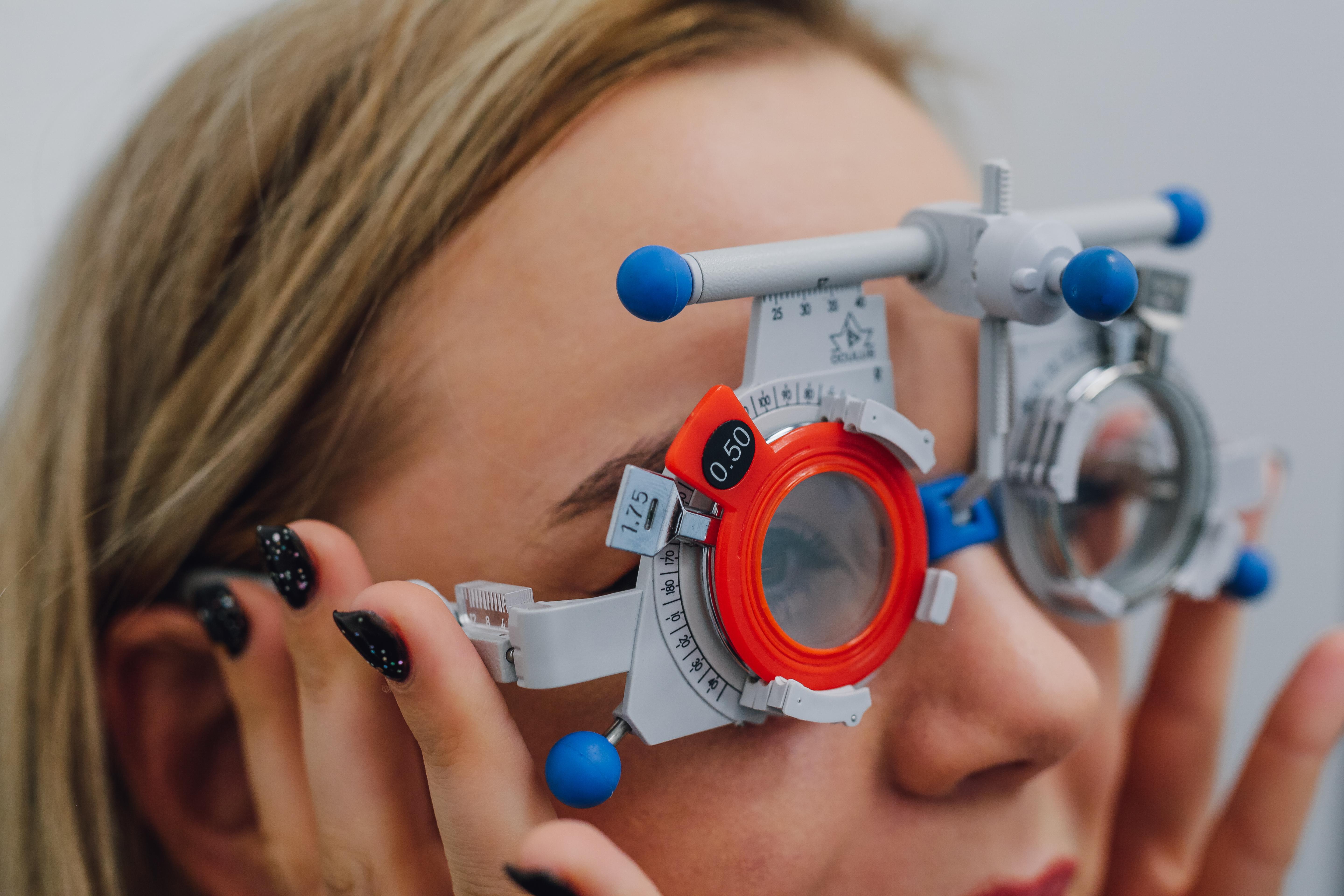
Regular eye check-ups are essential because myopia develops gradually and often goes unnoticed. Fortunately, there are several ways to slow its progression and support vision if the issue is detected early.
What if myopia has already developed?
Although minus glasses allow a person to live with myopia, the progression of nearsightedness increases the risk of various eye diseases. The most common are cataracts, glaucoma, and myopic retinopathy or retinal detachment. Studies show that people with high myopia (over -6) have a threefold increased risk of glaucoma.
High myopia develops during childhood, especially intensely between the ages of 9–14. It is rare in young children (under 1%). An annual increase of 0.5 diopters is considered normal. It is important to know that one millimeter of eye elongation corresponds to three diopters of myopia.
Myopia can progress very quickly; even within a single year, significant changes may occur. The first important eye exam should take place before starting school (at 6–7 years old) and should be conducted by an ophthalmologist. If a child already wears glasses, an annual eye check is recommended. Of course, if the child develops new symptoms before the next scheduled exam, a specialist should be consulted immediately.
What are the aids for myopia?
There are several optical solutions for treating myopia, including eyeglass lenses, contact lenses, and eye drops. As a new method, atropine treatment has been introduced in Estonia, which helps slow myopia progression. This eye drop relaxes the eye’s accommodation and should thereby slow eye growth.
Eye anatomy plays an important role in understanding rapid myopia progression in children. One main theory is related to hyperopic defocus. This means that when looking at an object, light does not fall on just one point (the macula) on the retina, but also on the peripheral areas. Because the retina is curved, when wearing glasses, light bends slightly differently—light in the periphery has slightly less minus power. As a result of hyperopic defocus, the axial length of the eye increases even while wearing glasses. To reduce this defocus, special contact and eyeglass lenses have been developed.
Special eyeglass lenses work as follows: in the center, where the child looks straight through, there is full correction. In the peripheral areas, there is plus power (up to +2.5 diopters), which reduces hyperopic defocus. These special lenses are expected to slow myopia by about 40%. They do not reduce existing myopia but help prevent it from increasing. Regular bifocal lenses are also used, although they are not as effective as lenses with peripheral defocus.
Vision is not just about visual acuity..
Vision also includes the ability to perceive contrasts, depth, and eye coordination. Therefore, there are several types of lenses to slow myopia progression, and each child can have a solution suited to them. The most effective treatment is rigid or ortho-keratology lenses. These are placed on the child’s eyes for sleeping. During the day, the child does not need to wear glasses, because at night the lens reshapes the cornea—technically reducing the axial length of the eye and also the hyperopic shift. Essentially, the child’s body receives a signal that the eye does not need to grow or elongate as much. Unfortunately, these are not produced in Estonia, and currently, our best option is lenses that slow myopia.
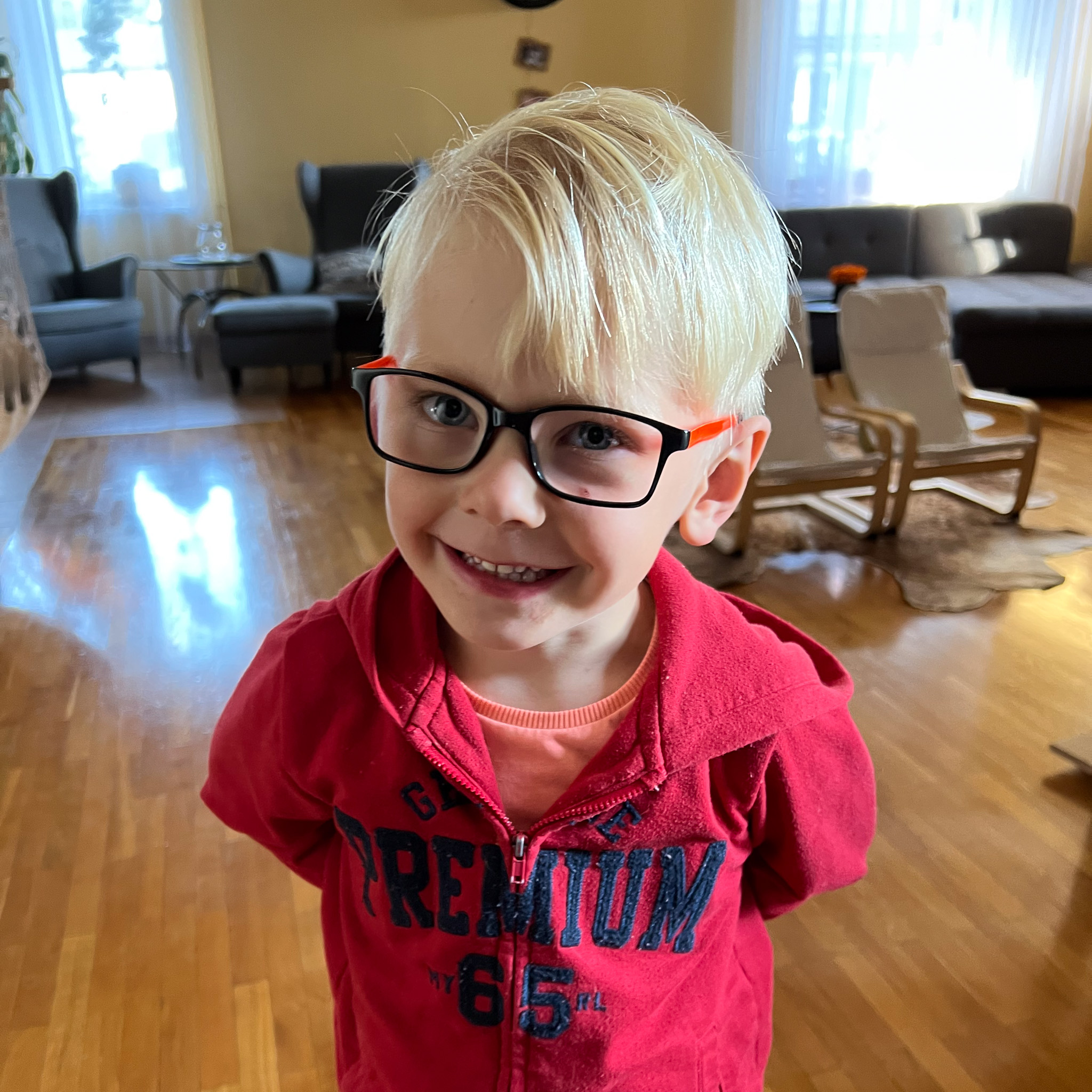
One common myth is that wearing glasses makes the eye “lazy.” There’s no need to worry about this. A lazy eye develops before the age of five. This means that a school-aged child cannot technically develop a lazy eye. In fact, if a child does not wear glasses, myopia and the need for minus lenses tend to increase.
Children adapt to glasses more easily than adults because their vision is more plastic. Getting used to new glasses usually takes up to two weeks. During this time, the comfort of the frame and visual clarity should be monitored. If vision becomes blurry again, it is important to consult a specialist.
At Pere Optika, every child can find suitable glasses. Our selection is wide and diverse, offering solutions even for active children who play sports. We provide special frames and accessories that ensure the glasses stay securely on the face during physical activities, allowing children to comfortably and worry-free enjoy their favorite activities.
Does LASIK surgery help with myopia?
For a successful laser operation, vision must be stabilized, which usually occurs between the ages of 19 and 21 when eye growth stops. Although the surgery can eliminate nearsightedness, the retina remains myopic, meaning the risk of eye diseases persists.
There are also certain risks associated with the surgery, such as dry eye syndrome. Additionally, the surgery does not prevent the need for reading glasses that comes with age.
Summary
Myopia often develops during childhood, and early detection and timely action can help slow its progression. Effective aids are available—special glasses, contact lenses, and eye drops—whose suitability depends on the individual characteristics of each child’s eyes. If you need advice or want to have your child’s vision checked, visit Pere Optika, where experienced and friendly optometrists are ready to help find the best solution to support your child’s vision.