Winter is a time when we take more care of our skin and immunity, but eye health often takes a back seat. Yet many people experience stinging, redness, watering, or fatigue in their eyes especially during the cold season.
These symptoms do not occur by chance; winter weather conditions and indoor climate pose their own challenges to the eyes.
In this article, we discuss which factors affect eye health the most in winter, why discomfort arises, and how daily habits and the right aids can support eye well-being.
Winter environmental effects
The winter air environment differs significantly from the summer. Air temperature, lighting conditions, and humidity affect the eyes just as much as they do the skin or respiratory system.
UV Radiation in Winter
There is a widespread myth that UV radiation is only dangerous in summer. UV radiation is not the same as visible light and spreads even on cloudy days when there is no bright sun outside. Moreover, snow reflects about 80% of UV radiation, meaning it reaches the eyes from both above, from the sun, and from the ground, reflected off the surface. This means that in winter, eyes often receive a higher dose of UV than we might expect. Prolonged exposure to UV radiation can cause eye irritation and increase the risk of various eye diseases, such as cataracts, eye inflammations, or tumors.
Therefore, sunglasses in winter are not merely an accessory but an important means of protecting the eyes.
Cold and Wind
The surface of the eye is covered with a tear film, which serves to keep the eye moist, protected, and ensure clear vision. However, the tear film is not just a single uniform liquid; it consists of three layers – the mucus layer, the aqueous layer, and the lipid layer. The lipid layer helps keep tears on the eye’s surface and prevents them from evaporating too quickly. For tears to fulfill their function, the layers must be balanced – they must be present in sufficient quantity and of good quality. In winter conditions, however, this balance can be easily disturbed.
In cold weather, our body reacts to the external environment with protective reflexes. For the eyes, this means that the surface becomes more sensitive and reacts to irritants more quickly. Wind and low temperatures increase mechanical irritation, which can cause stinging, redness, and tearing even after a short time outdoors.
A common sign of eye surface irritation is also redness. Winter environmental factors (especially low temperatures) combined with prolonged indoor stays can cause the dilation of blood vessels in the eyes, resulting in redness.
People who are especially sensitive include those with:
• dry eye syndrome
• eye hypersensitivity
• frequent screen use
• contact lens users
Tearing Eyes
Paradoxically, dry and irritated eyes can start producing even more tears. This is a protective mechanism of the body – the eye tries to “wash out” the irritant by producing a lot of aqueous tear layer. If too many tears are produced, they overflow from the eye. Winter eye irritants include cold, wind, sunlight, indoor forced ventilation, and uninterrupted work at a computer.
Darkness and Increased Visual Strain
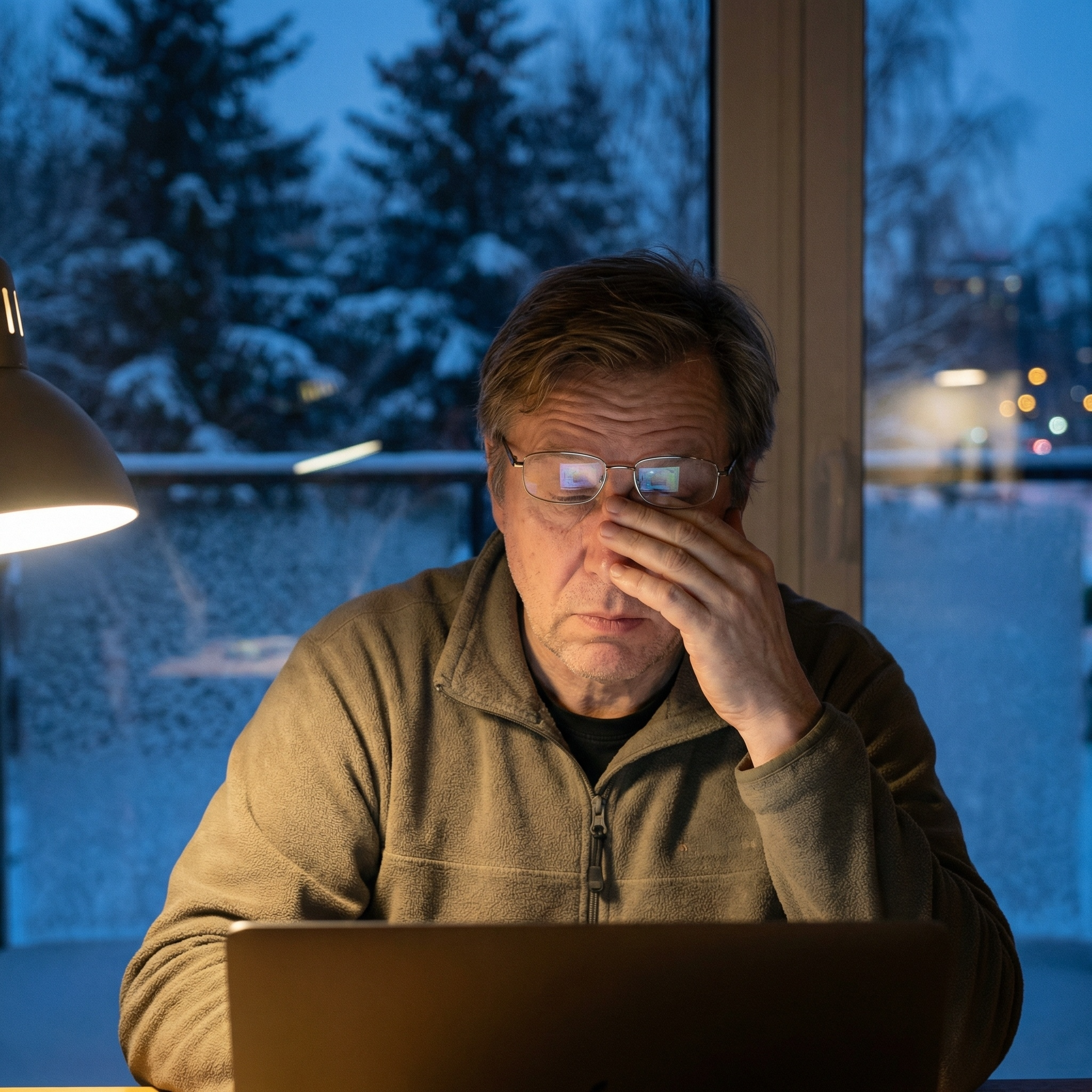
In winter months, there is significantly less daylight than in summer, and the eyes must adapt to constant dim light and artificial lighting. This means the visual system works under greater strain than in summer.
Seeing in low light requires more effort from the eyes, and situations like driving, screen work, and moving indoors—where lighting conditions can change quickly—become especially challenging. Many people notice that in winter their eyes tire faster, headaches occur, or vision becomes blurry in the evenings.
These symptoms are often not linked to changes in visual acuity, but smaller vision problems become more noticeable in the dark because the pupil enlarges. When the eyes have to strain constantly, fatigue and discomfort can worsen.
In darkness and under increased visual load, hidden vision problems often surface that may not be noticeable under normal lighting conditions. Therefore, regular eye exams are an important part of maintaining eye health.
For children who already wear glasses, it is recommended to have an eye exam once a year, as their eyes are still developing and vision can change quickly. For adults, a vision check every two years is generally sufficient, but in case of complaints or increased strain, it is worth having an eye exam sooner.
Corrected vision helps reduce eye strain, improve well-being, and make movement and driving safer in the dark.
Heating Season and Dry Indoor Air
In winter, we spend most of our time indoors, where central heating is running. Dry indoor air often affects the eyes even more than the outdoor environment.
During the winter period:
• Indoor humidity drops below the recommended level,
• The natural moisture balance of the eyes is disturbed,
• Use of artificial lighting increases,
• Blink rate decreases (especially when looking at screens)
Symptoms may initially go unnoticed, but over time, the following can occur:
• Rapid eye fatigue
• Blurred vision (which improves with blinking)
• Increased light sensitivity
In offices and home offices, dry eye syndrome is particularly common, so it is worth paying conscious attention to eye well-being.
Artificial Light
In addition to dry indoor air, artificial light also affects eye health. During winter, we spend more time under artificial light, which may not be ideal for the eyes. Light that is too bright, cold (bluish), or uneven can also increase eye fatigue and worsen dryness.
It is especially important to pay attention to workplace lighting and avoid situations where screen light is the only source of illumination in the room.
Glasses and Contact Lenses – What to Consider in Winter
The winter season affects glasses and contact lens wearers differently, and each option has its own characteristics.
Contact Lenses
Contact lenses offer freedom of movement and comfort, and they don’t fog up, but in winter they can put extra strain on the eyes. Long days in dry indoor air and cold outdoor air can cause discomfort when wearing contact lenses, and there may be a need for moisturizing eye drops. In this case, using eye drops can help.
Glasses
Glasses provide physical protection for the eyes against wind and cold, and the lenses can protect against UV radiation. However, a common problem is glasses fogging up when temperatures change, for example, when going indoors from outside.
Anti-Fog Solutions – Clear Vision in Any Situation
Fogging of glasses is not only inconvenient but can also be dangerous in everyday situations. Fog forms on the inside of the lenses when warm, moist air meets the cold surface of the lenses and condenses.
Anti-fog products help to:
• Keep lenses clear for longer
• Reduce the need for constant cleaning
• Improve visual clarity
During winter, anti-fog solutions are especially helpful for those who are active, play sports, or wear glasses with a scarf or mask. This small step in daily glasses care can make wearing glasses in winter significantly more comfortable.
Daily Tips for Maintaining Eye Health in Winter
Winter eye care doesn’t have to be complicated. Consistent and simple habits help keep eyes healthy and improve overall well-being.
- Wear UV-protective glasses in winter, especially in bright snow and sunny conditions. Photochromic lenses, which darken in response to UV light, are also a great solution.
- Take regular breaks from screen work (for example, 5 minutes break every 30 minutes at the computer).
- Use moisturizing eye drops if needed.
- Avoid rubbing your eyes.
- Drink enough water.
- Keep indoor humidity at a normal level (40–60%).
- Clean glasses regularly and use anti-fog products.
- If eye discomfort persists, consult a specialist.
Summary: Mindful care makes winter easier on the eyes
You don’t have to suffer from eye discomfort in winter. By understanding which factors affect the eyes during the cold season and adjusting your daily habits, it is possible to significantly improve eye well-being.
Whether it involves choosing the right glasses, using appropriate care products, or simply taking more mindful breaks throughout the day, small changes help keep the eyes healthy and vision clear throughout the winter.