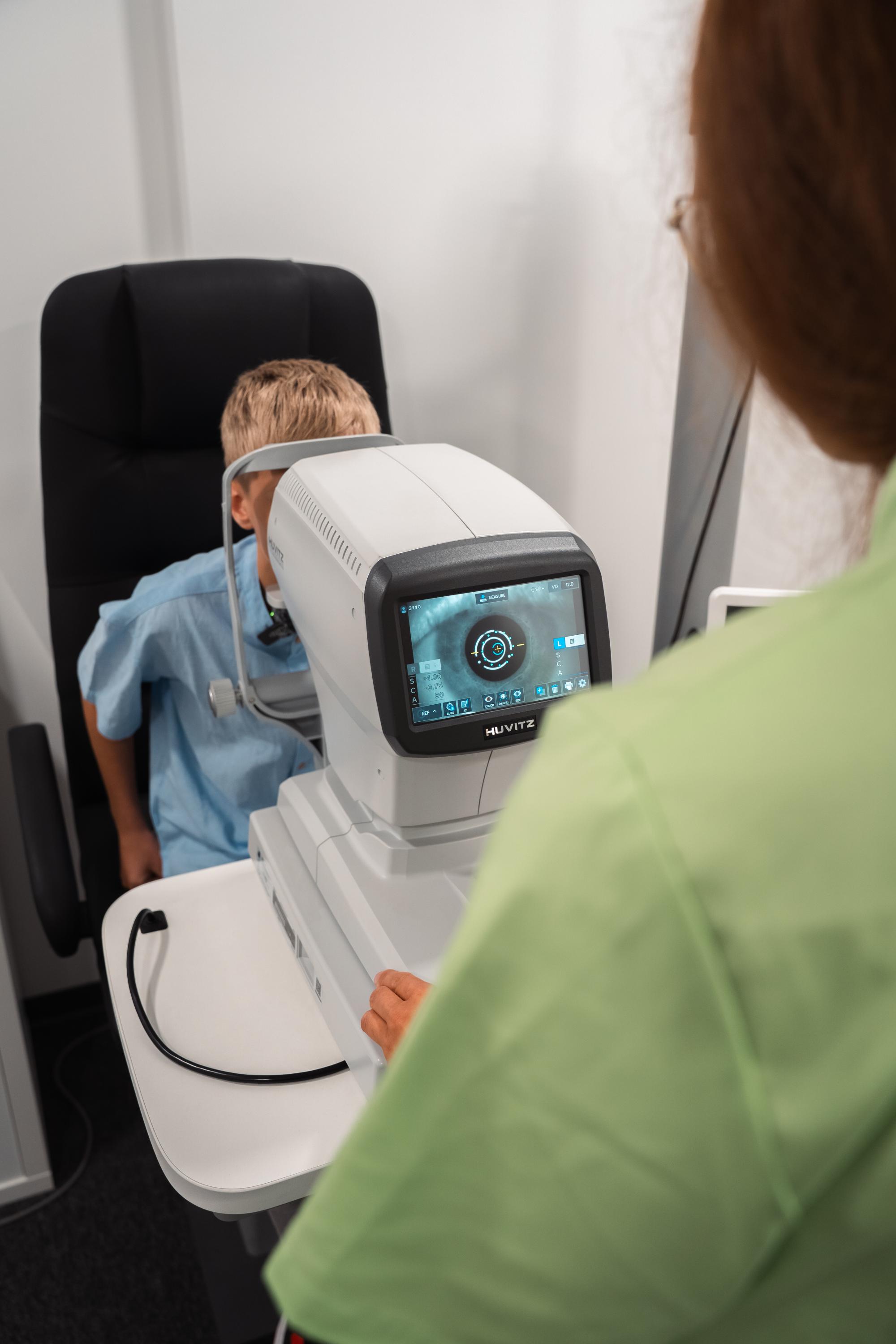
Eye pressure measurement is a quick and painless measurement carried out by an optometrist. We measure the pressure inside your eye and tell you the result straight away: whether it falls within the usual range or not. If it does not, we recommend seeing an ophthalmologist. On this page we explain how the measurement works and what the result means.

What does eye pressure show?
Intraocular pressure is the pressure inside the eye that keeps the eyeball in shape and lets the fluid inside it move normally. It is measured in millimetres of mercury (mmHg). The measurement gives a value at that moment, which the optometrist compares with the usual range. The measurement itself is not an examination and is not an assessment of your eye health, it is one figure alongside the other readings taken during a vision test.
Steps of the eye pressure measurement
Measuring eye pressure is a quick and painless process that usually takes only a few minutes. Most people do not feel any discomfort at all.
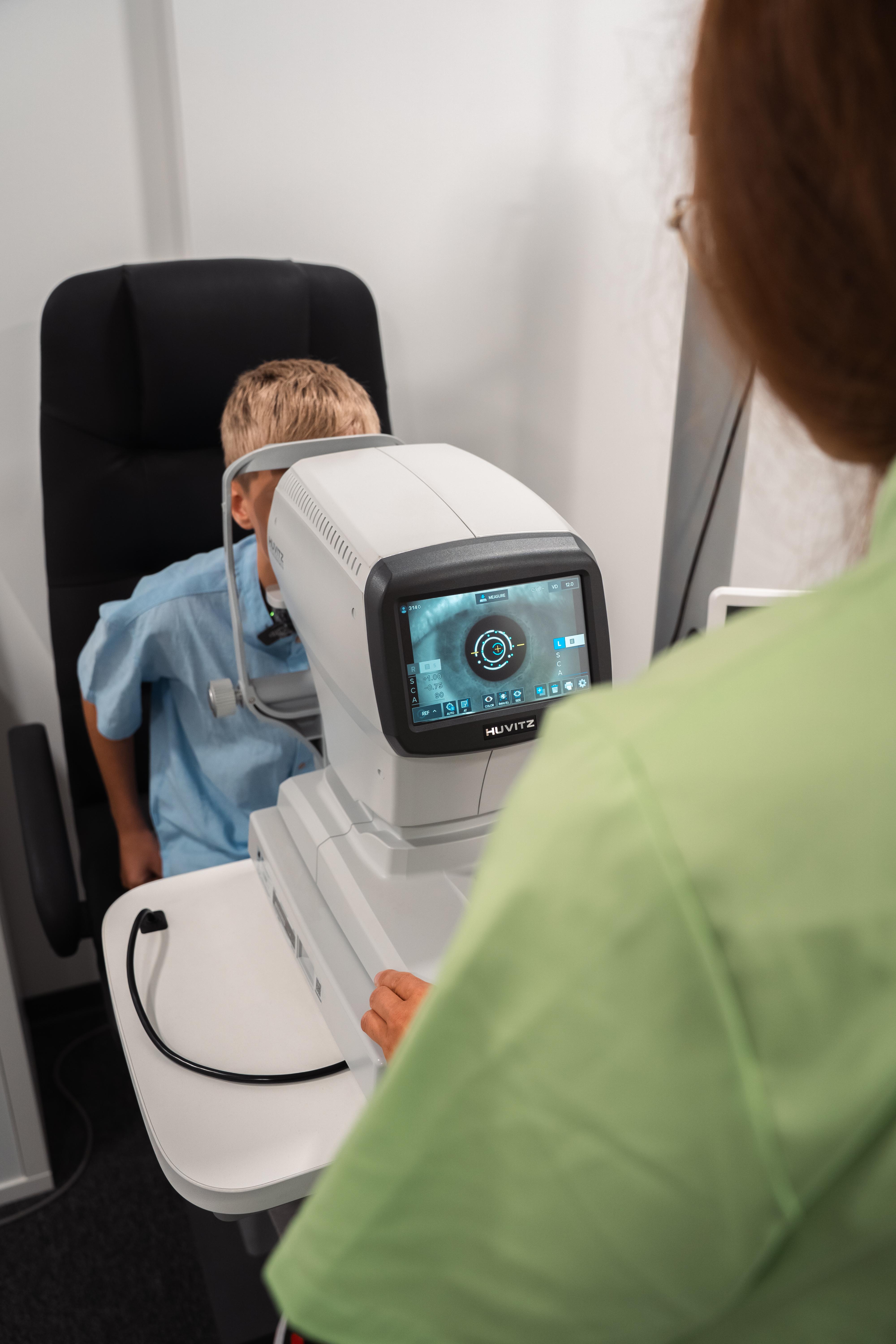
Before we start. We will have a short conversation about your eyes and your general health. If you wear contact lenses, we will ask you to remove them for a moment (we will provide a case and solution if needed).
Sit comfortably. Rest your chin and forehead on the device support, look at the marked point and breathe calmly. We will guide you throughout.
The measurement. The device directs a small puff of air towards your eye. The eye is not touched, there are no needles and no pain, the first puff may just feel a little surprising. It lasts a fraction of a second.
Repeated measurements. For accuracy we usually take 2–3 measurements for each eye and use the average.
The result straight away. We explain the numbers (mmHg) and tell you whether the result falls within the usual range. If it does not, we recommend seeing an ophthalmologist. Our measurement does not replace an appointment with a doctor.

Who should have their eye pressure measured regularly?
Eye pressure is individual, and for some people it is worth keeping track of more often. A regular check is particularly sensible for:
People over 40
People whose close relatives have had glaucoma
People with high myopia or hyperopia
People with diabetes
Glaucoma is an eye disease diagnosed and treated by an ophthalmologist. The eye pressure measured by an optometrist is one figure among others and does not replace an appointment with an ophthalmologist.
Summary
Eye pressure measurement is quick, painless and takes a couple of minutes. You get the result straight away and know whether it falls within the usual range. Feel free to ask for it when you come in for a vision test. If the result needs a closer look, we will say so and recommend seeing an ophthalmologist.